Reading time: 2 minutes
Well, yes, you read it right. After defeating a human in poker or giving them help to clean the environment, the next big step for AI will be to enter the Kitchen! However unrealistic and impossible it may sound, it is already happening and will soon happen at a larger scale in the future.
The cooking community has always been decided on if cooking is an art or science; and after this technical revolution, the verdict may soon become clear. As AI enters mostly all the aspects of our lives, it is surprising to not have anticipated how it will deep root itself in the cooking aspect too.
Know More: IoT and Medical Devices
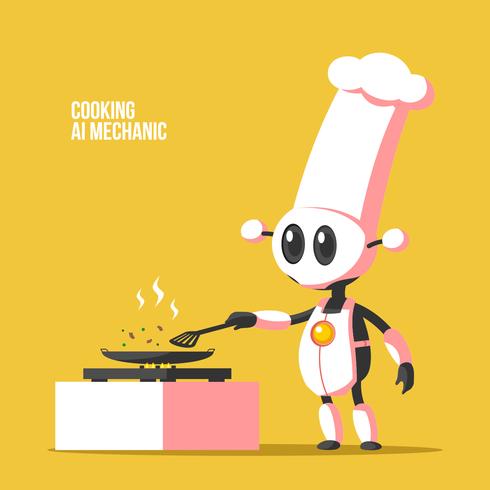
So how does AI work in Cooking?
Well, for starters it is helping large corporations coming up with certain taste forecasting and taste measuring tools to ensure that their recipe is unaffected by human error and if the changes they aim to implement go smoothly or not. We've seen intelligent cooking robots in science fiction for decades, and now they finally seem to be becoming a reality. However, what is really amazing is not the development of the advanced functions of kitchen robots (that has culminated with Moley's human-like robotic arms), but the capabilities that AI has to understand our tastes. These robots are for real and will do anything to help us cook better, tastier and in a more efficient manner.
Are we the spectator of our own lives?
For example, the most ambitious project, however, seems to be Gastrograph, an AI platform that could map taste preferences with allegedly amazing precision. Thanks to this technology, processed food could be made to match specific, individual tastes rather than just appeal to the masses.
Well, yes, you read it right. After defeating a human in poker or giving them help to clean the environment, the next big step for AI will be to enter the Kitchen! However unrealistic and impossible it may sound, it is already happening and will soon happen at a larger scale in the future.
The cooking community has always been decided on if cooking is an art or science; and after this technical revolution, the verdict may soon become clear. As AI enters mostly all the aspects of our lives, it is surprising to not have anticipated how it will deep root itself in the cooking aspect too.
Know More: IoT and Medical Devices
So how does AI work in Cooking?
Well, for starters it is helping large corporations coming up with certain taste forecasting and taste measuring tools to ensure that their recipe is unaffected by human error and if the changes they aim to implement go smoothly or not. We've seen intelligent cooking robots in science fiction for decades, and now they finally seem to be becoming a reality. However, what is really amazing is not the development of the advanced functions of kitchen robots (that has culminated with Moley's human-like robotic arms), but the capabilities that AI has to understand our tastes. These robots are for real and will do anything to help us cook better, tastier and in a more efficient manner.
Are we the spectator of our own lives?
For example, the most ambitious project, however, seems to be Gastrograph, an AI platform that could map taste preferences with allegedly amazing precision. Thanks to this technology, processed food could be made to match specific, individual tastes rather than just appeal to the masses.
Comments
Post a Comment
We are happy about any feedback. Just leave it here!